

The Greenbrier
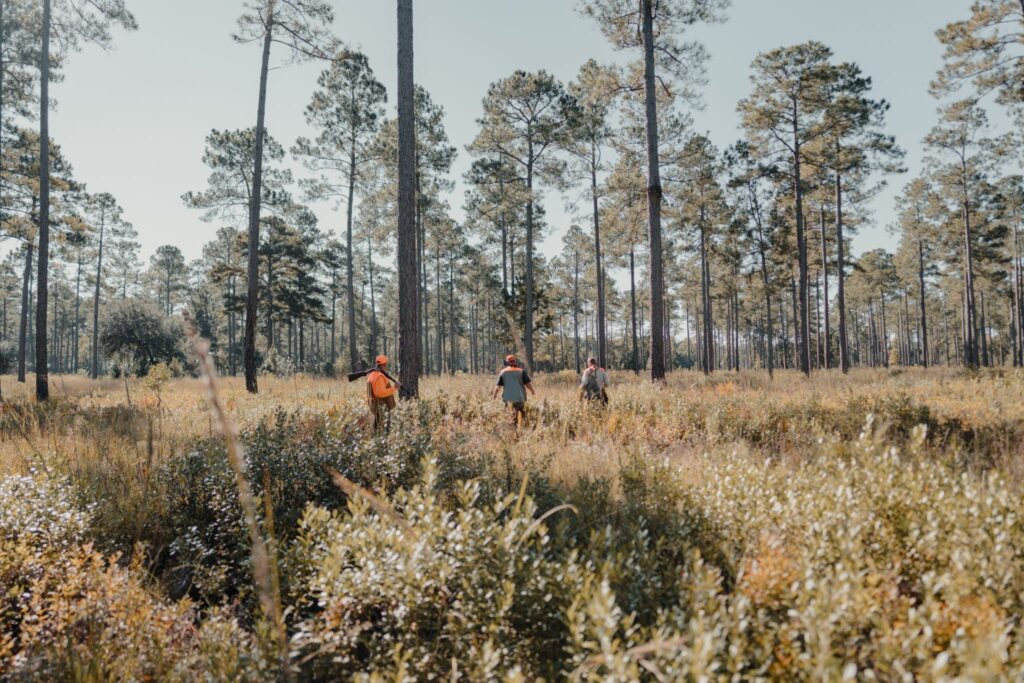
The Story Behind Our Newest Quail Course
One of the questions we hear most often is, “How do you come up with the names for your quail courses?”
At Almost Heaven Plantation, every name has a story.
From the very beginning, Almost Heaven was created to bring a small piece of our home state of West Virginia to the South Carolina Lowcountry. While our roots are now firmly planted among the pines and marshes, our hearts will always carry a deep appreciation for the mountains, traditions, and places that helped shape our family.
With that in mind, it seemed only fitting that our newest quail course would be named The Greenbrier.
Growing up just over an hour away from The Greenbrier, the Hylton family attended countless meetings, celebrations, and special events at one of America’s most iconic resorts. It wasn’t simply a hotel, it was part of the backdrop of our lives.
The Greenbrier’s story stretches back more than two centuries. The area first became known in 1778 for its famous mineral springs, drawing visitors seeking the healing waters of what is now White Sulphur Springs. The resort itself opened in 1913 and quickly established a reputation for elegance unlike anywhere else in the country.
Its history reaches far beyond hospitality. During World War II, The Greenbrier served as a U.S. Army General Hospital, caring for thousands of wounded soldiers. Decades later, the world learned of one of America’s best-kept secrets… an enormous underground bunker, constructed beneath the resort during the Cold War as an emergency shelter for the United States Congress. Hidden for more than 30 years, it remains one of the most fascinating chapters in American history.
Today, The Greenbrier continues to welcome guests from around the world. Its beautifully manicured grounds, championship golf courses, unmistakable Dorothy Draper interiors, rich history, and enduring sense of class have attracted royalty, foreign dignitaries, and more than 25 United States presidents. It’s the kind of place you never truly forget after your first visit.
For us, however, The Greenbrier has always represented something even greater.
It represents timeless hospitality. It represents tradition. It represents doing things the right way while embracing the comforts that today’s guests appreciate.
Those are the very same principles we strive to uphold at Almost Heaven Plantation.
Development of our newest quail course began several years ago, but like any great habitat, it couldn’t be rushed. We allowed the cover to mature naturally until it reached the density needed to properly hold coveys of quail. Through careful habitat management and with additional selective thinning planned in the future, the course has developed into exactly what we envisioned.
Hunters familiar with our other courses will immediately notice something different about The Greenbrier. Gentle rolling hills, unique terrain, and changing elevations create a landscape unlike anywhere else on the plantation. Every course at Almost Heaven has its own personality, and The Greenbrier is no exception.
While we can’t promise you’ll discover a secret underground bunker tucked beneath the pines, we can promise a course that reflects the same appreciation for history, craftsmanship, and tradition that inspired its name.
We hope that every hunt through The Greenbrier reminds our guests that some of the finest sporting traditions are built by honoring the past while continuing to invest in the future. That’s a philosophy that has shaped Almost Heaven from the very beginning, and one we’re proud to carry forward with every season.
Historical information about The Greenbrier was compiled from publicly available resources, including the official history of The Greenbrier Resort, the Museum of Jewish Heritage’s account of The Greenbrier’s role as a U.S. Army General Hospital during World War II, and reporting by The Washington Post regarding the Congressional bunker first publicly revealed in 1992.
Where Every Great Gun Dog Begins
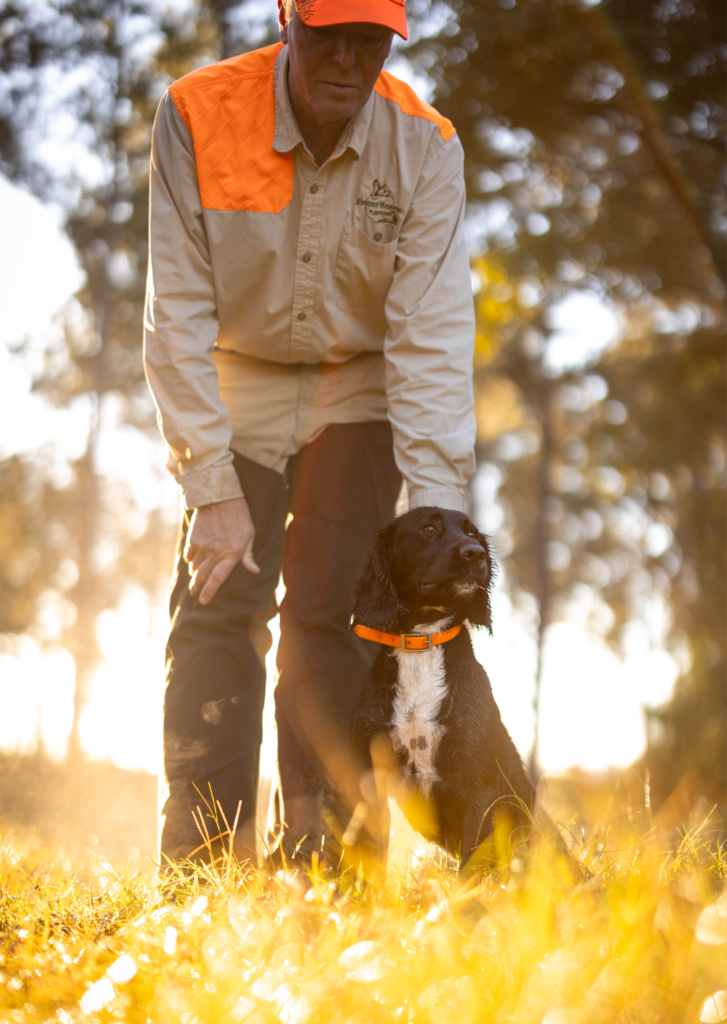
A Conversation with Dog Trainer Scott Keown
As another hunting season begins to take shape at Almost Heaven Plantation, I recently sat down with our dog trainer, Scott Keown, to talk about the first steps in transforming an energetic young puppy into a dependable gun dog.
One of the first questions I asked Scott was, “When should training actually begin?”
“Around 18 weeks of age,” he explained. This is when puppies are introduced to basic commands such as heel, recall, and either sit or whoa, depending on the breed. Using a placement board, puppies begin learning these commands in a calm, positive environment while building confidence and trust with their handler.
Of course, no future bird dog’s education would be complete without birds. Scott explained that puppies are introduced to live birds in a fun, pressure-free environment to encourage their natural instincts. Pointing breeds learn to establish point, flushing breeds build enthusiasm for pursuing birds, and retrievers begin developing the concept of hunting dead by searching for and recovering downed or crippled game. Every session is designed to encourage the puppy to use its nose while simply enjoying being in the field.
One part of our conversation that I found especially fascinating was Scott’s approach to introducing gunfire. Rather than exposing a puppy to loud sounds immediately, every step is carefully planned to build confidence.
Once a puppy becomes completely focused on birds and no longer pays attention to outside distractions, Scott has an assistant stand nearly 100 yards away with a blank pistol. While the puppy is happily chasing a bird, the assistant fires a single shot safely into the air. If the puppy remains focused on the bird and shows no concern for the sound, the assistant gradually moves closer—first to about 50 yards away, then closer still over several repetitions. Eventually, the assistant is standing beside Scott, still firing safely into the air, as another bird is thrown.
The process doesn’t stop there. Once the puppy is completely comfortable with the blank pistol, Scott gradually introduces different firearms, beginning with a .410 before progressing to a 28-gauge and eventually a 20-gauge shotgun. Each introduction follows the same careful approach, with the firearm being discharged safely into the air while the puppy remains engaged with the bird. If a puppy shows even the slightest hesitation, training simply returns to chasing birds and having fun. As Scott put it, “Repetition is always the key to success.”
As we wrapped up our conversation, I asked Scott what he hopes every puppy gains from this first stage of training.
“This program is one month in duration and gives each puppy a great foundation before beginning more formal gun dog training at around six months of age,” he said.
He summed up his goal with a sentence I won’t soon forget:
“With formal training, you can have a family dog that can be a superior hunting partner by day and a couch potato by night.”
As someone who has the privilege of watching Scott work every day, I can honestly say he takes tremendous pride in what he does—and it shows in every hunt. Our dogs aren’t just part of the hunting program; they’re part of the Almost Heaven family, and we’re incredibly grateful to have Scott’s knowledge, patience, and kind heart leading the pack.
Thank you, Scott, for everything you do. We’re proud to have you as part of the Almost Heaven family.
The Beginning of a New Tradition
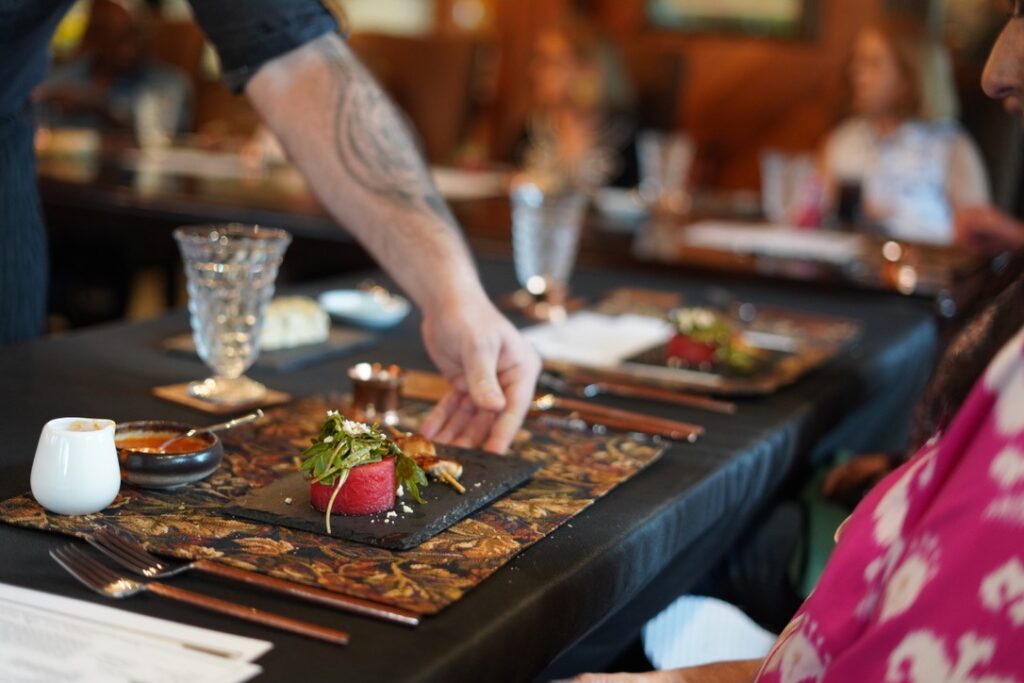
A Taste of the Lowcountry
When we first imagined our Table & Traditions series, our hope was simple—to bring people together through exceptional food, meaningful conversation, and Southern hospitality. This summer, that vision came to life with our inaugural event, A Taste of the Lowcountry.
Led by Almost Heaven’s own Chef Russell, the evening gave guests a closer look at the creativity and technique behind each course. Rather than simply preparing the meal behind the scenes, he shared the ingredients, inspiration, and methods that brought every dish to life.
The menu featured Pickled Crab with Roasted Tomato Gazpacho; Sweet Tea Glazed Quail Skewers with watermelon, arugula, brûléed goat cheese, and blackberry vinaigrette; Coffee-Rubbed Duck Breast with sweet potato purée, okra frites, and muscadine jus; and Sweet Corn Crème Brûlée topped with Appalachian caramel corn.
One of the evening’s most meaningful surprises was having Chef Russell’s original culinary instructor participate in the class. It was a special full-circle moment to watch the teacher become the guest as Russell shared the knowledge, creativity, and experience he has developed throughout his career.
More than anything, the evening was memorable because of the conversation and connection around the table. Guests asked questions, exchanged stories, and enjoyed an atmosphere that felt more like gathering with friends than attending a formal dinner.
We are incredibly grateful to everyone who joined us and helped make our first Table & Traditions event such a success. This is only the beginning, and we look forward to creating many more opportunities to gather, learn, and celebrate the hospitality at the heart of Almost Heaven Plantation.
